


〔粵〕在一個瞬息萬變的世界中,我們要怎樣設計?「前瞻性思維」(Futures Thinking)如何能夠幫助我們在充滿不確定性的未來中前行?在不能確切知道未來會發生什麼事之前,處於現在的我們能做什麼?設計思維系列的第五集,Peter與我們一起討論「前瞻性思維」。
[Cantonese] How can we design when the world won’t stand still? How can Futures Thinking help us to navigate an uncertain future? What can we start making today, without knowing exactly what’s coming? Peter returns for the fifth episode of our design thinking series to talk about Futures Thinking.
What is Futures Thinking?
Probable (最可能發生的未來)
Possible (可能的未來)
Plausible (合理的未來)
Preferable (理想的未來)
New public housing in Singapore: Pinnacle@Duxton


Only two things could stop the graphic designer from growing up with the rest of the technological world: a failure to familiarize himself with the new areas of knowledge springing up alongside his own; and an inability to free himself from the straight-jacket of his preconceptions about the kind of tasks with which he expects to be confronted.
Excerpt from the Introduction of Ken Garland’s Graphics Handbook, 1966.
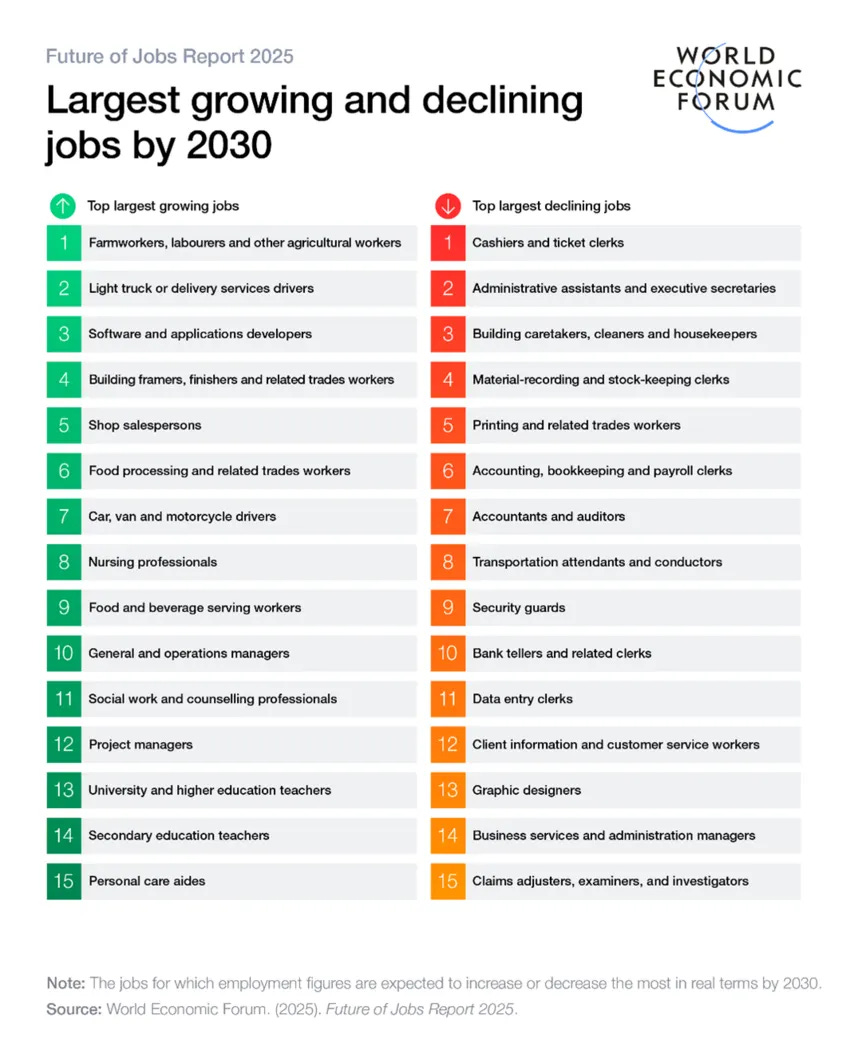
World Economic Forum Future of Jobs Report 2025
Podcast summary (by Gemini)
For reference only
1. Defining “Futures Thinking”
The discussion begins by highlighting that “Future” is often used in the plural (Futures) because there isn’t just one set path. Design is inherently a forward-looking act; designers imagine a possible future to improve upon the present.
Peter introduces the “4 Ps” framework used to categorize different types of futures:
Probable: What is likely to happen if current trends continue.
Possible: What could happen based on future knowledge.
Plausible: What is logically or scientifically reasonable.
Preferable: The ideal future we want to happen.
2. The Crisis of Graphic Design
The hosts discuss the World Economic Forum’s “Future of Jobs” report, which lists “Graphic Design” as a declining profession.
From Objects to Strategies: In the past, design education was “object-oriented” (e.g., “design a poster”). However, the hosts argue that the medium (print vs. digital) is becoming less important than the strategy behind the communication.
The AI Factor: If a designer’s only value is “making things look good,” they will be replaced by AI. To survive, designers must move from being “implementers” to “consultants” who offer strategic insights and systemic solutions.
3. Case Study: Public Housing in Singapore
Peter shares how Singapore uses Futures Thinking at a government level:
Long-term Vision: Because Singapore is small and resource-scarce, the government plans 50 years ahead, breaking it down into 10-year increments.
Changing Perceptions: By applying Futures Thinking, Singapore transformed public housing (HDB) from basic shelters into high-quality, aesthetically pleasing living spaces (e.g., Pinnacle@Duxton). This shifts the public’s expectation of what a “government home” can be, unlike the more “reactive” or market-driven housing approach often seen in Hong Kong.
4. Tactical vs. Strategic Design
The hosts debate the “HK Pace” (fast and cheap).
Tactical: A client pays $100 for a poster to be done in two weeks. This is a short-term fix.
Strategic: A designer asks, “Why do you need a poster? Is there a better way to achieve your goal for the next 5 years?”
The conclusion is that while tactical work pays the bills, designers must equip themselves with strategic value to avoid becoming obsolete.
5. Three Core Competencies for the Future
Peter concludes with three skills designers need to develop:
Big Picture / Systems Thinking: Looking beyond the individual object to see how everything is interconnected.
Grounded Imagination: Having the optimism to imagine a better world, but grounding that imagination in knowledge and data rather than just “daydreaming.”
Scenario Thinking: The ability to map out multiple “what-if” scenarios and create designs that can adapt to them.
Final Thought
The hosts reference a 1966 quote by British designer Ken Garland: A designer only stops growing if they fail to learn new areas of knowledge or remain trapped in their own preconceptions about what “design” should be. Even 60 years ago, the message was clear: Designers must evolve with technology or be left behind.
1. 什麼是前瞻性思維(Futures Thinking)?
非單一未來: 英文中使用複數 “Futures”,強調未來不是只有一種可能,而是包含多種「替代未來」(Alternative Futures)。
四個 P 模型: Peter 介紹了評估未來的四個維度:
Probable (最可能的未來): 根據現狀推測最容易發生的。
Possible (可能的未來): 基於現有知識,理論上可能發生的。
Plausible (合理的未來): 在邏輯上說得通、具備發生條件的。
Preferable (理想的未來): 我們最希望達成、最理想的結果。
核心本質: 前瞻性思維不只是預測,而是透過想像與分析來「創造未來」,並思考設計如何為未來帶來改善。
2. 設計專業的演變與危機感
平面設計的沒落: 引用世界經濟論壇(WEF)的報告,平面設計被列為可能衰落的職業之一。
從「物件」轉向「策略」: 過去的設計教育側重於產出特定物件(如海報、小冊子),但現代設計(如溝通設計 Communication Design)更應關注「溝通的目的」與「策略」。
AI 的威脅: 如果設計師的價值僅止於「美化圖片」或「排版」,則極易被 AI 取代。設計師必須轉向提供「策略性建議」、「研究」或「設計政策」等更深層次的價值。
3. 新加坡的實踐案例:公共房屋(Public Housing)
政府的遠見: 新加坡資源匱乏,因此政府極其重視前瞻性思維,會為 50 年後的城市發展做規劃,並將其拆解為 10 年、20 年的階段性任務。
改變預期: 透過前瞻性思維,新加坡將公屋從「單純的住所」提升至接近私樓的品質,改變了市民對公共建築的刻板印象。
4. 培養前瞻性思維的三大核心能力
嘉賓 Peter 總結了設計師應具備的三種能力:
大局觀思維 (Big Picture Thinking): 具備宏觀視野,將問題放在「系統思維(Systems Thinking)」中檢視,而不僅僅看當下。
基於根據的想像力 (Grounded Imagination): 設計師必須是樂觀主義者(Optimist),相信未來可以被改善。但想像力必須建立在知識的基礎上,而非天馬行空。
情境分析 (Scenario Thinking): 有能力構建不同的情境,分析各種變量如何影響未來,並在其中找到解決方案。
5. 結論與省思
設計師的角色: 1966 年的設計大師 Ken Garland 曾預言,設計師若不學習新知識或不擺脫過時的自我預設,將無法與技術世界同步。
行動的必要性: 前瞻性思維不是空談,必須透過實踐(Implementation)來落實。設計師應從「執行者(Implementer)」轉型為「顧問(Consultant)」,幫助客戶思考更長遠的可持續性(Sustainability)。
Previous episodes:
EP35 同理心 Empathy
同理心 Empathy

〔粵〕設計思維系列的第四集,繼續由Peter Chuah蔡振嘉帶領我們探討設計思維內的「同理心」如何影響實踐的成效。設計的好壞是否見仁見智?設計思維中的同理心能否確保一個設計的質素?設計風格和具有同理心考量的作品能否共存?
EP28 模棱兩可? Embrace ambiguity

EP25 設計中的思維 Thinking in design
設計中的思維 Thinking in design

〔粵〕什麼是設計思維?除了用於設計領域,設計思維能否應用在其他的範疇上?承第18集討論批判性思維,我們邀請了蔡振嘉Peter Chuah再次作客,繼續聚焦設計思維相關的議題和討論。
EP18 與蔡振嘉談批判性思維 On critical thinking with Peter Chuah
與蔡振嘉談批判性思維 On critical thinking with Peter Chuah

〔粵〕何謂批判性思維?批判性思維和評論、批評又有什麼關係?創意思維與批判性思維是一枚硬幣的兩面,如何在設計教學中融合兩者?本集邀請了來自新加坡社科大學的蔡振嘉博士探討批判性思維和設計的關係和種種問題。


